Chinese Cars Are Taking Over — And Japanese Brands Are Paying the Price
BYD, Chery and GWM are surging in 2026 while Toyota, Nissan and Mazda all slide backwards.
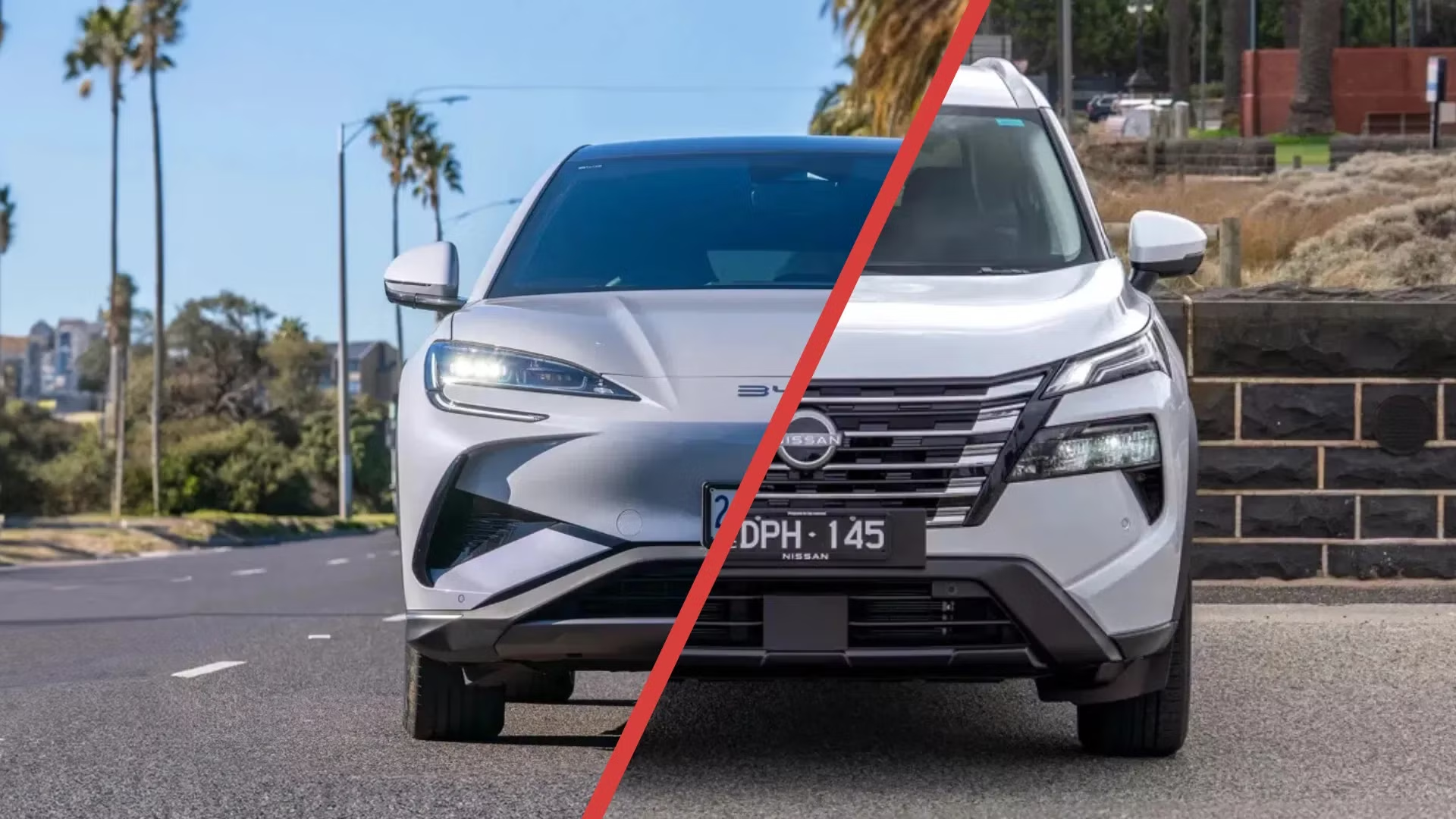
If you've noticed more BYDs and Chery Omegas on Perth's roads lately, that's not your imagination. Chinese car brands are having a massive 2026, and the numbers make clear who's losing ground as a result: Japanese manufacturers.
For WA buyers, this shift matters. Whether you're replacing a ageing Mazda CX-5, eyeing a new ute for runs up to Geraldton or Kalgoorlie, or just trying to stretch your dollar further amid high fuel prices, the expanding Chinese line-up is giving you more options — often at sharper prices — than ever before.
The Numbers Don't Lie
Across the first four months of 2026, the 14 Chinese brands that report sales through VFACTS collectively moved 93,539 vehicles nationally — a 40 per cent jump on the same period in 2025, when that figure sat at 56,510. In the same window, Japanese brands dropped from 186,507 units to 150,797 — a 20 per cent fall.
Do the maths and it lines up almost perfectly: China gained roughly 37,000 sales, Japan shed roughly 35,700. The buyers are moving across directly.
Leading the Chinese charge are BYD (up 110.8%), Chery (up 92.4%), Geely (up 842.8%), Zeekr (up 955%), and Leapmotor (up 116.5%). GWM, already well established with the Tank 300 and Haval H6, is up a further 26.8%. There are also new entrants — Denza, Omoda Jaecoo, Deepal, Foton, and Farizon — still building momentum but adding to the overall weight of the category.
Not every Chinese brand is thriving. LDV is down 9.4%, MG has slipped 1.6%, and JAC has dropped 44.8%. But the overall trajectory is firmly upward.
Japanese Brands Feeling the Squeeze
On the other side of the ledger, only Isuzu Ute has managed growth among Japanese brands in 2026 — up 6.7% to 13,285 units, driven by strong demand for the D-Max and MU-X. For WA buyers who spend serious time on unsealed roads or need a genuine tow vehicle, that loyalty to proven hardware makes sense.
Every other Japanese brand is in the red. Nissan has taken the biggest percentage hit, down 32.2% to 9,737 units, partly due to the axing of the Juke, Leaf, and Pathfinder. Mitsubishi is down 25.5%, hurt by the discontinuation of the Eclipse Cross and Pajero Sport, and the ASX moving to a pricier European-built platform. Suzuki has shed 23.4% of its sales, though updated Jimny and Vitara models could help stabilise things.
Toyota — still the dominant force in WA, where the HiLux is practically a state icon — is down 22.7%, having sold 17,502 fewer vehicles than this time last year. The next-generation RAV4 and HiLux have only recently arrived, so a bounce-back in the second half of 2026 is plausible. Subaru is down 19.3%, Lexus down 13.8%, and Mazda down 13.1%. Honda is the closest to holding steady, sitting just 54 units behind last year's pace.
What This Means If You're Buying Now
For WA buyers, the practical takeaway is straightforward: competition is heating up, and that's good for you. Chinese brands are pushing hard on value, technology, and warranty terms to win customers — and Japanese brands are having to respond, whether through sharper pricing, faster model updates, or improved inclusions.
If you're buying a daily driver for Perth metro use or a family SUV, the Chinese brands now offer genuine alternatives that deserve consideration on spec and price. If you're heading bush regularly, towing a boat to Mandurah or a caravan up the Brand Highway, the proven reliability record of established Japanese utes and SUVs still carries real weight — and WA's remote distances make that reliability question more than just a theoretical one.
China hasn't overtaken Japan in raw sales yet, but at the current pace, that gap is closing faster than most industry watchers predicted. Watch this space.
Get WA car news in your inbox
New reviews and buying guides for Western Australian buyers.