Could Australia Build EVs Again? What It Means for WA Buyers
The PM wants local car manufacturing back. Here's the reality — and why WA drivers should pay attention.
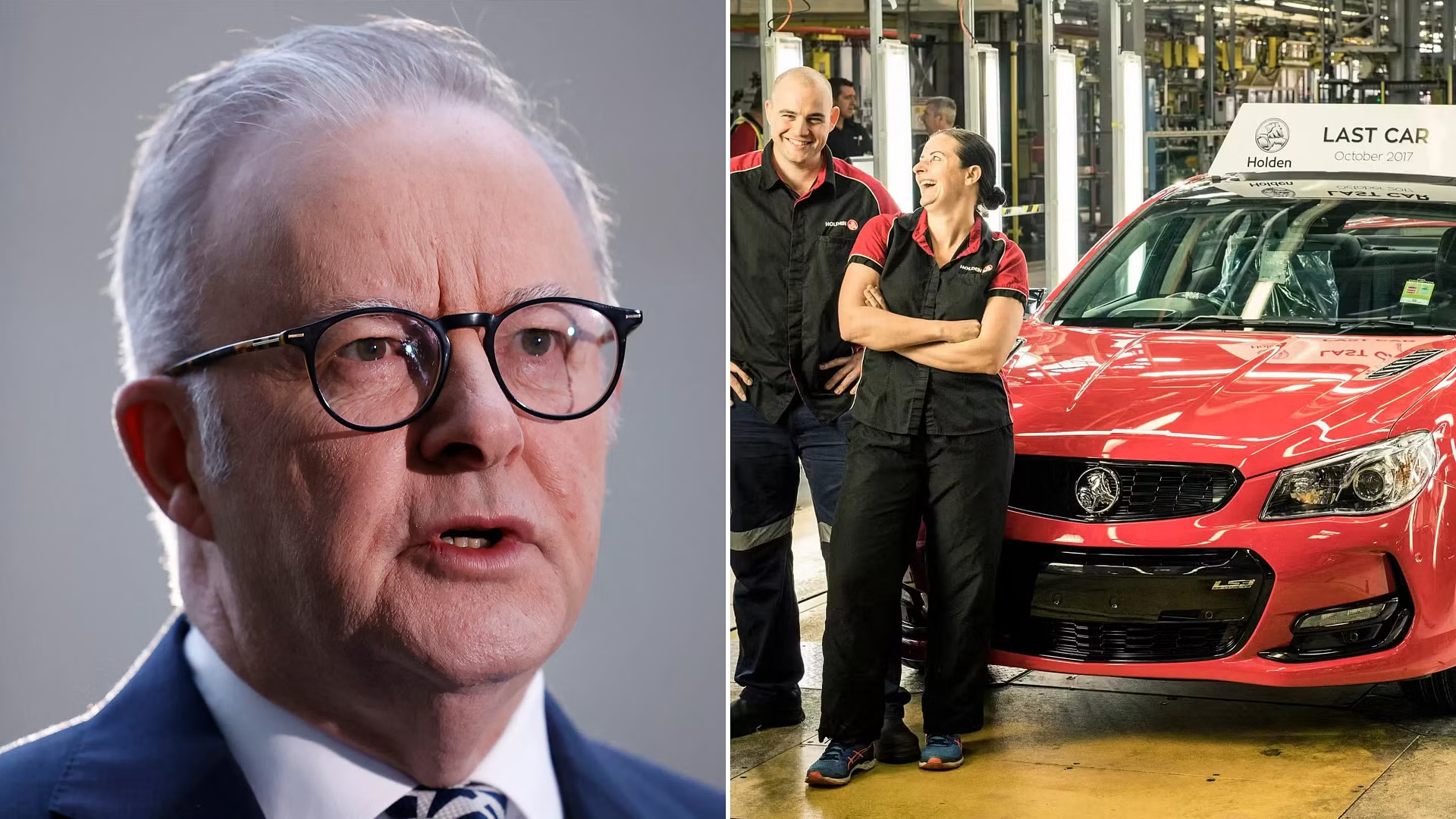
Prime Minister Anthony Albanese has gone on record saying there's "no reason" Australia can't manufacture electric vehicles locally, warning that relying on China and Asia for our cars creates a national "vulnerability". It's a bold statement — but is there any substance behind it, and does it actually matter to someone buying a car in Perth today?
What Albanese Actually Said
Speaking at a News Corp event, Albanese pointed to the collapse of Australian manufacturing — from 14 per cent of GDP in 1990 to just 5 per cent in 2025 — as a cautionary tale. He argued that new technology, particularly robotics and automation, could shift the economics of local production by reducing the reliance on labour costs that killed the industry last time around.
"We saw a decline of manufacturing in Australia because of differential labour costs. New technology means that labour is less important than transport costs," he said.
He also made the case for at least building EV components and batteries on home soil — something Tesla chair Robyn Denholm has echoed, pointing to Australia's vast lithium deposits as a ready-made advantage.
And yes, he called the end of Holden "a pity". Hard to argue with that one.
Why It's Not as Simple as It Sounds
Australian car manufacturing shut down in 2017, and the numbers that drove that decision haven't magically improved. When Ford announced its closure back in 2013, it estimated building a car in Australia cost twice as much as in Europe — and four times as much as in Asia. The free-trade agreements we've signed since then with Japan, South Korea and China have only made imported vehicles cheaper by comparison.
Chinese brand Chery has actually pushed this conversation along, with its international president suggesting that greater use of robots on production lines — combined with government policy changes — could make a local factory viable again. It's an interesting pitch from a brand that currently ships cars to Australia from China.
The honest reality is that reopening a shuttered Australian car plant isn't a matter of flicking a switch. The engineering talent that once built Ford Falcons now develops Rangers and Everests for over 180 global markets. Firms like Walkinshaw and Premcar do impressive local work — converting Ram and Chevrolet utes to right-hand drive, and developing off-road versions of popular utes — but they operate at a fraction of the scale needed for mass manufacturing.
What This Means If You're Buying a Car in WA Right Now
For most West Australians, locally-made cars remain a distant prospect. If you're shopping today — whether it's an EV for your daily Perth commute or a capable ute for running regional WA roads — your choices are almost entirely imported, and that's not changing soon.
What could shift is pricing. If federal policy moves toward supporting local EV battery production or component manufacturing, there's an argument it could eventually reduce costs on Australian-delivered EVs. WA buyers already feel the pinch at the bowser — Perth fuel prices regularly spike well above the national average — which makes the case for EVs stronger here than almost anywhere else in the country. The catch is that upfront EV purchase prices remain a barrier, and WA's registration costs don't exactly soften the blow.
For now, the practical advice is straightforward: don't hold off buying a car waiting for an Australian-made EV to arrive on the market. That's a conversation for 2030 at the earliest, and likely much later. What you can do is keep an eye on the Federal Government's EV incentive policy, which has more immediate impact on what you'll actually pay at a dealership.
Local manufacturing making a comeback would be a genuine win for Australian industry. But WA buyers need solutions on the forecourt today — and that means making sense of the imported options already available.
Get WA car news in your inbox
New reviews and buying guides for Western Australian buyers.