Ford's Ranger Reliance Is a Risk as BYD Closes the Gap Fast
Two models carry almost 90% of Ford's sales — and both are sliding. Here's what it means for WA buyers.
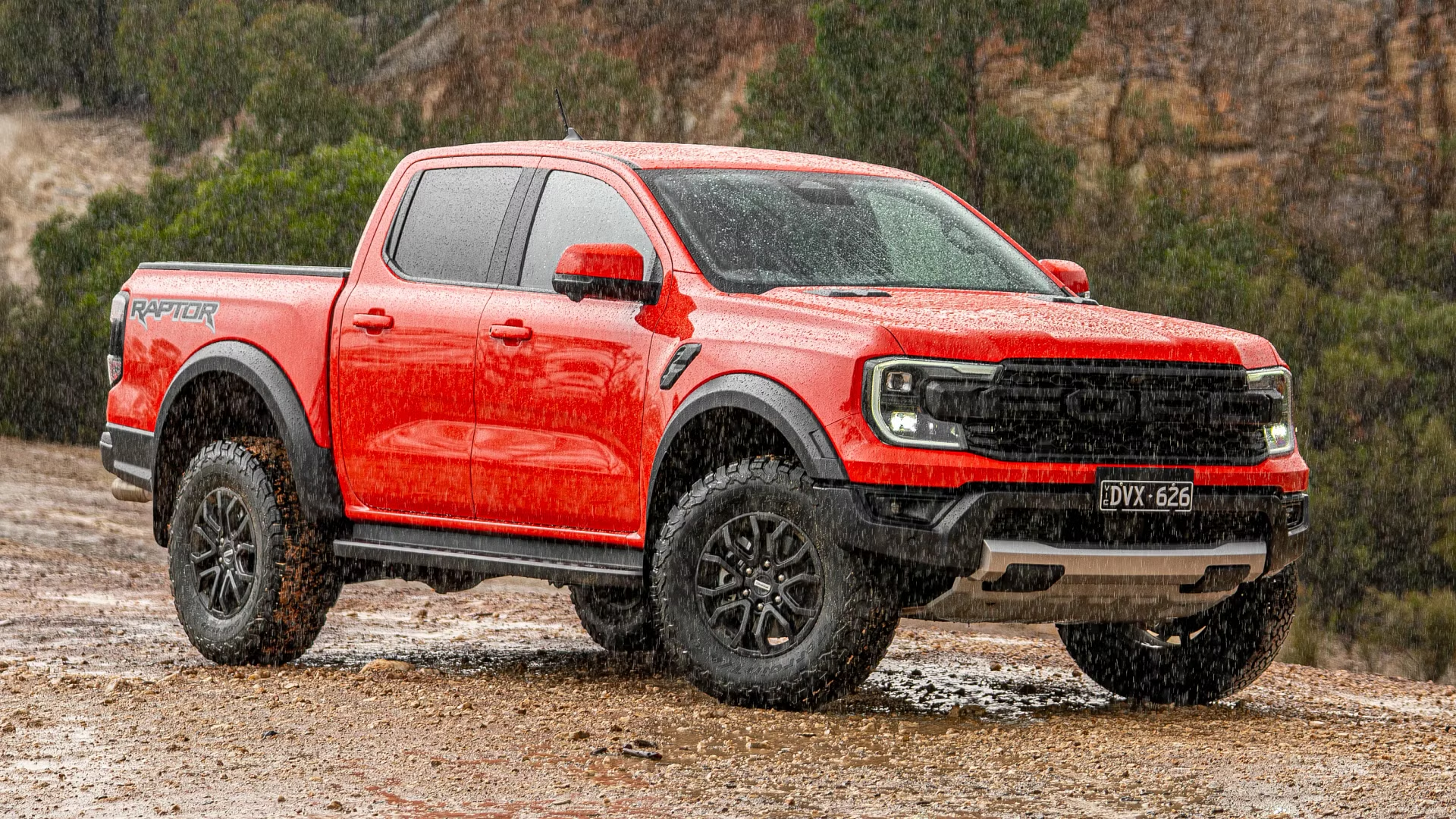
Ford has built its Australian sales position almost entirely on two vehicles — the Ranger ute and Everest SUV. That strategy has worked well enough, but cracks are starting to show, and the numbers through the first four months of 2025 make for uncomfortable reading at Ford HQ.
Two Models, One Big Problem
Through to the end of April, Ford has sold 15,841 Rangers and 7,081 Everests in Australia. Combined, that's 22,922 units out of a total 25,920 — or 88.4 per cent of everything Ford sells. Strip those two out and there's almost nothing left.
The deeper issue is that both are trending downward. Ranger sales are off 8.2 per cent compared to the same period last year, despite Ford adding the Super Duty variant late in 2024. Everest is down 1.9 per cent, with April alone coming in nearly 700 units short of April 2024.
For WA buyers, the Ranger and Everest have always been natural fits — whether you're towing a boat down to Mandurah, heading out to the Kimberley on a long weekend, or just navigating the school run in the northern suburbs. Diesel torque, tow capacity, and ground clearance matter here more than almost anywhere else in the country. But with diesel fuel prices being squeezed by ongoing instability in the Middle East, running costs on diesel-only vehicles like the Everest are becoming harder to ignore at the bowser.
The Rest of the Range Is Struggling Too
Outside of the Ranger and Everest, Ford's lineup is largely going backwards. The Mustang has fallen off a cliff — down 47.6 per cent to just 927 sales nationally. The Mustang Mach-E is down 29.8 per cent to 127 units, even after a recent update. The Tourneo, Transit Custom, and Transit are all softer too.
The one bright spot is the F-150, up 30.6 per cent to 661 units on the back of an updated model. It's a niche vehicle with a niche audience, but WA's mining sector and lifestyle market does absorb more of these than most states — so that's at least a small positive for the brand locally.
The broader picture, though, is a brand heavily exposed to the performance of just two nameplates, with limited ability to absorb a sustained sales downturn across either.
BYD Is Right Behind Ford — and Closing
Here's where things get genuinely interesting for the Australian market. BYD finished April as the second-best-selling brand in the country with 7,702 monthly sales. Ford came third with 5,748. Year-to-date, BYD sits at 25,243 sales — just 677 units behind Ford's total. At the current trajectory, BYD could overtake Ford before the end of 2025.
For WA buyers weighing up their next purchase, this shift matters beyond brand loyalty. A more competitive market means more pressure on pricing, more options at the mid-range, and more urgency from dealers to move stock. Ford's dominance in the ute and large SUV space still holds for now, and the Ranger PHEV offers a practical alternative for buyers wanting to ease off diesel costs — but the window where Ford can coast on Ranger strength alone is narrowing.
If you're in the market for a Ranger or Everest, the current softening in sales could work in your favour at the negotiating table. Dealers don't love slow months, and that's often when the better drive-away deals appear.
Get WA car news in your inbox
New reviews and buying guides for Western Australian buyers.