Holden's Iconic Test Track Sells at Half Price — What It Means for WA Buyers
The Lang Lang proving ground just sold to a defence contractor for $20.35m — a big loss for VinFast and a shift for how cars get tuned for Aussie roads.
If you've ever wondered why some imported cars feel oddly tuned for Australian conditions — too stiff on corrugated dirt roads, too floaty on the highway — part of the answer lies in what happens at closed proving grounds before a car reaches the showroom. And one of Australia's most important ones just changed hands in a deal that tells you a lot about where the local car industry is headed.
From Holden's Home to a Defence Contractor's Backyard
The Lang Lang proving ground, south-east of Melbourne, has sold for $20.35 million to DefendTex, a defence contractor that builds autonomous buggies and drones. That price tag sounds significant until you learn that Vietnamese car maker VinFast paid $36.3 million for the same 877-hectare site back in 2020 — and that figure is equivalent to roughly $46.5 million in today's dollars. That's an eight-figure loss by any measure.
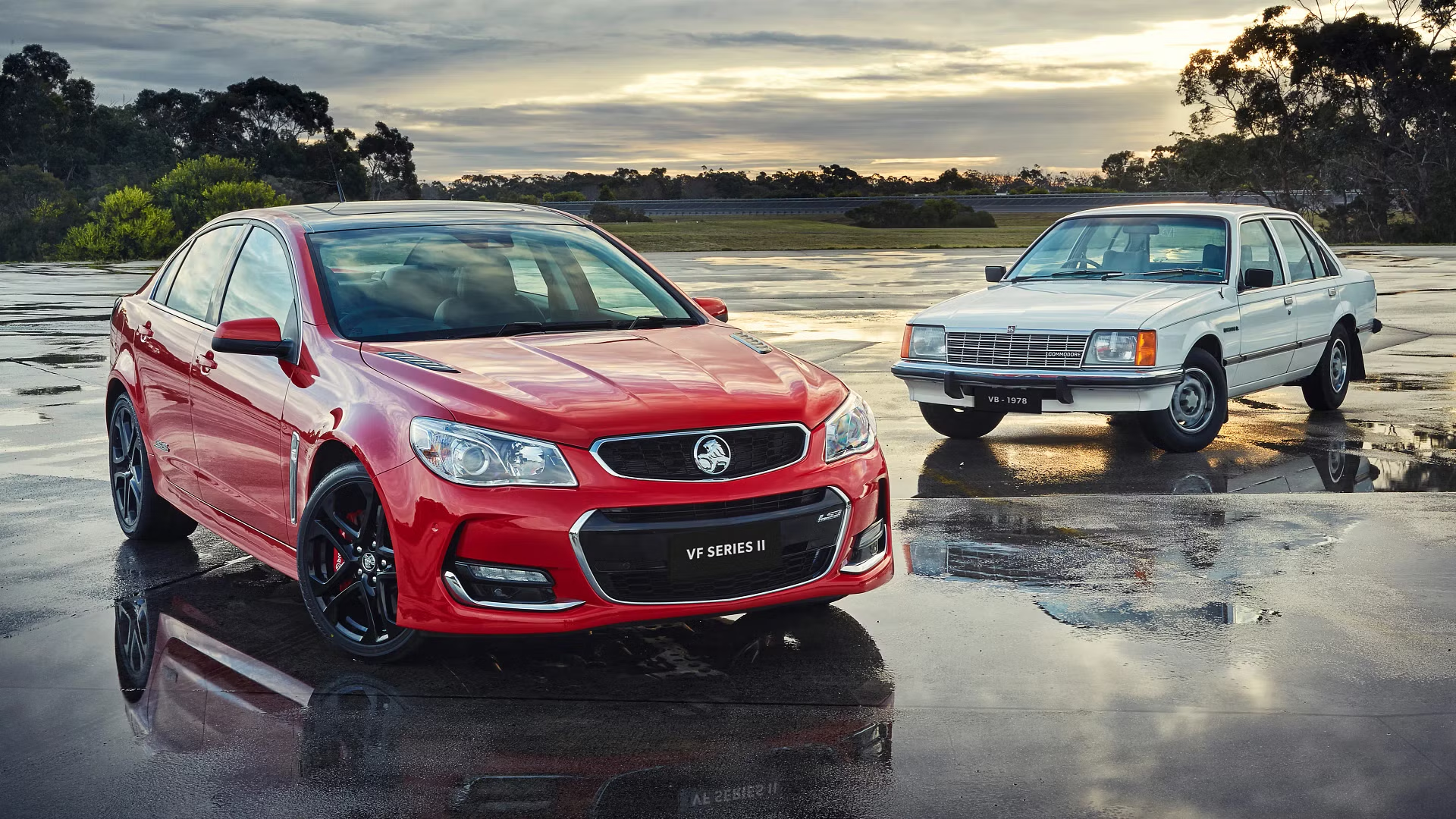
Opened in 1958, Lang Lang was where Holden developed and tortured virtually every car it ever sold in Australia, including the locally-built Commodores that were a fixture on Perth streets and WA country highways for decades. After GM shut Holden and offloaded the facility, VinFast bought it with apparent ambitions for Australian operations — then disbanded its local engineering team just nine months later. The site has been sitting awkwardly on the market ever since.
In the meantime, VinFast leased it out to other manufacturers. BYD, JAC, and most notably GWM all used the track's 44km network of sealed and unsealed roads — including a high-speed rural road simulation and off-road sections — for local development work. GWM even set up a long-term program there, led by former Holden engineer Rob Trubiani, specifically tuning suspension and steering for Australian roads. That kind of local calibration matters more than most buyers realise, particularly for anyone driving WA's mix of metro freeways, regional highways, and genuinely rough outback tracks.
GWM Hits a Speedbump, Buyers Should Watch Closely
With DefendTex taking over, GWM has been told it can no longer use the facility beyond mid-May. GWM Australia's chief operating officer John Kett called it a "minor speedbump" and confirmed the brand is already securing an alternative Melbourne facility for dealer training and product development.
For WA buyers considering a GWM vehicle — and the Haval and Tank ranges have been selling strongly here — this is worth keeping an eye on. Local tuning programs are one of the few ways an imported brand genuinely tailors a product to Australian conditions rather than simply dropping a left-hand-drive global spec car onto our roads and hoping for the best. If GWM's alternative facility gets up and running quickly, buyers shouldn't notice a difference. If there's a prolonged gap, it could affect how well-sorted the next round of models feel on WA roads.
Where Does Australian Vehicle Testing Go From Here?
With Lang Lang effectively leaving the automotive world, manufacturers now have fewer options for closed-road testing on Australian soil. The main alternative is the Australian Automotive Research Centre near Anglesea in Victoria. Ford still holds its own proving ground at You Yangs, where the Ranger and Everest — both strong sellers in WA thanks to the state's appetite for utes and 4WDs — were developed for global markets.
For WA buyers, the broader takeaway is straightforward: the infrastructure that supports local vehicle development is shrinking. That puts more pressure on manufacturers to either invest in remaining facilities or do less local calibration work altogether. At a time when buyers in Perth and regional WA are spending serious money on vehicles that need to perform across a huge range of conditions — from the Kwinana Freeway to the Kimberley — that's not a trend to be comfortable with.
The Lang Lang story isn't just a property deal. It's a signal about how seriously the industry is investing in making cars work for us, rather than just selling us whatever works everywhere else.
Get WA car news in your inbox
New reviews and buying guides for Western Australian buyers.