Kia Eyes Return to Petrol Performance — What It Means for WA
Kia is weighing up GT badges for petrol models like the K4 and Seltos, but a Stinger comeback looks unlikely.
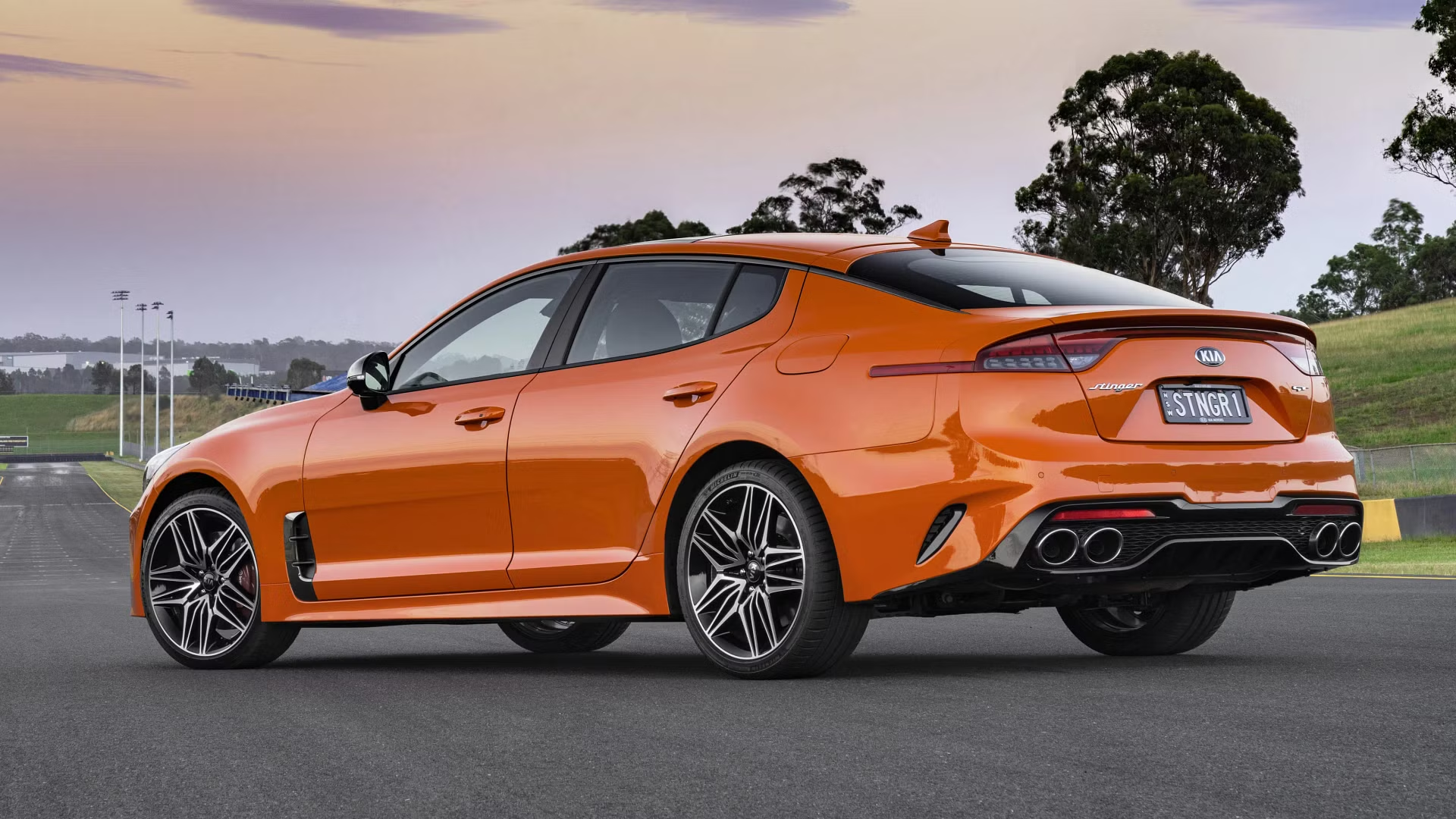
If you've been quietly mourning the death of the Kia Stinger or the Cerato GT, there's a glimmer of hope — though temper your expectations. Kia has confirmed it's actively reviewing its GT performance strategy, and petrol-powered models are back on the table.
What Kia Is Actually Considering
For years, Kia has been channelling its GT badge exclusively into electric vehicles — the EV6 GT and EV9 GT being the two models currently available in Australia. Globally, there's an even broader EV GT lineup, but the brand let its petrol performance heroes quietly die. The Stinger GT finished production in mid-2023. The Cerato GT hung around until late 2024. The Picanto GT was axed in 2023. Since then, if you wanted a Kia with some fire in it, you needed to go electric.
Now Kia's head of global business planning, Spencer Cho, has told Australian media the company is "reviewing what kind of GT strategy we have to take as a next level" — and that includes internal combustion engine models. Asked directly whether a K4 hot hatch or a Seltos performance SUV could wear the GT badge, Cho's response was simple: "Possibly, possibly."
That's not a confirmation, but it's not a dismissal either.
The K4 and Seltos Are the Most Realistic Candidates
Of all the petrol Kias currently on sale, the K4 small car and the Seltos small SUV make the most sense for a GT upgrade. Both share front-wheel-drive underpinnings with the Hyundai i30 Sedan N platform — meaning there's proven performance hardware in the family already.
The most potent engine currently available across both models globally is a 1.6-litre turbo-petrol four-cylinder producing 142kW and 265Nm, paired with an eight-speed automatic. For context, the outgoing Cerato GT used a 150kW version of that same engine with stiffer suspension and a dual-clutch gearbox — and it was a genuinely good steer around Perth's hills or on a long run up to the Wheatbelt.
Here in WA, where you're often covering serious distances between stops and fuel prices already sting, a properly sorted hot hatch or sports SUV that doesn't require a charging stop every 400km has obvious real-world appeal. The Seltos in particular suits WA buyers — it's a practical size for city use but capable enough for the occasional unsealed road.
One catch: the new Seltos arriving in Australia later this year will be hybrid-only, so any petrol GT version would be a future consideration, not an immediate one. The K4, meanwhile, does offer the 1.6-litre turbo locally — badged as GT-Line — so that pipeline is at least open.
Don't Hold Your Breath for a New Stinger
If you were hoping Kia would revive the Stinger with a twin-turbo V6 and rear-wheel drive, the signals from the company aren't encouraging. The original Stinger sold well in Australia — genuinely punching above its weight in this market — but globally its numbers were modest, and that's what drives these decisions.
Kia has hinted a Stinger spiritual successor could happen as an electric vehicle, possibly based on the Vision Meta Concept shown last year. But a petrol-powered, V6-equipped performance sedan? Cho didn't put it on the list.
The broader GT electric range continues to expand, with the EV6 GT producing up to 478kW and hitting 100km/h in a claimed 3.4 seconds. That's properly quick by any measure. But not every WA buyer is ready to commit to an EV — particularly those outside metro Perth where public charging infrastructure is still thin on the ground.
A petrol GT option from Kia would fill a real gap. Whether the company pulls the trigger on it is another matter entirely — but for the first time in a while, it's a genuine possibility rather than wishful thinking.
Get WA car news in your inbox
New reviews and buying guides for Western Australian buyers.